


AEO Tools Are How Websites Become UCP-Ready
- Wise Pilot
- Jan 11
- 4 min read

Updated: May 13
What UCP readiness means, why AI led commerce depends on it, and how AEO Tools prepare your site for decision time
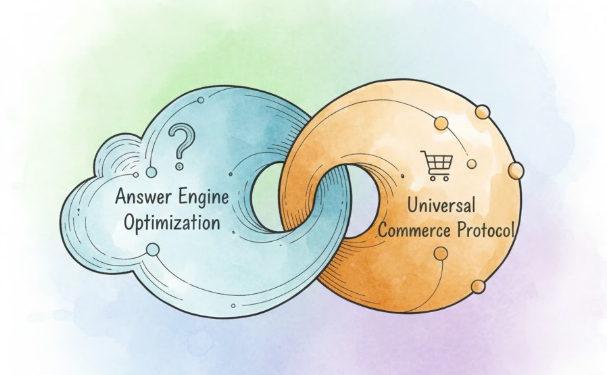
AEO Tools make websites UCP-ready by structuring content so AI systems can understand what you sell, why it matters, and when to recommend it.
As Google shifts commerce toward AI-mediated decisions through initiatives like the Universal Commerce Protocol (UCP), websites that are unclear, unstructured, or written only for humans risk being invisible at the moment decisions are made. AEO Tools solve this by making businesses legible, trustworthy, and recommendation-ready for AI systems before checkout ever happens.
Prefer a short explanation in video form? Watch below.
What “UCP-Ready” Actually Means (In Plain English)
There is a lot of noise right now around AI checkout, agent-led commerce, and Google’s Universal Commerce Protocol.
Let’s simplify it.
UCP does not mean:
Every website gets instant AI checkout
Websites stop mattering
SEO disappears overnight
UCP does mean:
Google is becoming a decision layer, not just a traffic source
AI agents increasingly influence what gets recommended
The most important moment is no longer the click, but the decision moment
To be UCP-ready, a website must answer one critical question clearly:
Can an AI confidently understand, explain, and trust this business?
That is not a checkout problem.
That is an answer problem.
Why Traditional SEO Is Not Enough for UCP
Traditional SEO optimized websites for:
Rankings
Keywords
Traffic
Click-through rates
UCP shifts the focus to:
Decisions
Recommendations
Trust
Machine confidence
AI systems do not care whether:
A page looks visually impressive
A headline is clever
Copy is persuasive to humans
AI systems do care whether:
The offering is clearly defined
Pricing and scope are explicit
Answers are consistent across pages
Explanations match real user intent
Content can be reused without interpretation
Most websites fail here because they were written for humans to skim, not for machines to decide.
This Is Where AEO Tools Come In
AEO (Answer Engine Optimization) Tools exist to prepare websites for AI led decision systems.
They do this by transforming unstructured, marketing-heavy content into:
Clear questions
Direct answers
Structured explanations
Consistent definitions
Machine-readable intent
In simple terms: AEO Tools turn websites into sources AI can rely on.
That reliability is a prerequisite for UCP.
UCP Is About Checkout. AEO Is About Eligibility.
This distinction matters.
UCP focuses on:
Transactions
Payments
Fulfillment logic
AEO focuses on:
Understanding
Trust
Recommendation eligibility
AI cannot buy what it does not understand. AI cannot recommend what it cannot explain.
AEO Tools sit upstream of UCP.
Without AEO:
Product information is ambiguous
Value propositions are unclear
Websites look like content instead of solutions
With AEO:
Businesses become explainable
Answers become reusable
Offerings become comparable
Brands become machine-trustworthy
That is what “UCP-ready” actually means.
What AEO Optimized Websites Can Do That Others Can’t
Websites built with AEO principles can:
Be summarized accurately by AI assistants
Be cited confidently in AI-generated answers
Be compared fairly against competitors
Be recommended at decision time
Be trusted without requiring a click
This is the future of visibility.
Not traffic.
Not rankings.
Decisions.
AEO Tools Are Not Optional in an Agent-Led World
As commerce becomes more:
AI-mediated
Off-site
Intent-driven
Websites that rely on:
Vague copy
Hidden pricing
Marketing fluff
Assumed context
...Will disappear from AI answers entirely.
AEO Tools do not replace websites. They translate websites for AI systems.
The Bottom Line
UCP is changing how purchases happen. AEO determines who gets considered.
If your website is not:
Clear
Structured
Answer-driven
Machine-readable
You won’t lose visibility at checkout. You’ll lose visibility before the decision is ever made.
That is why AEO Tools make websites UCP-ready.
If you want your business to remain visible as search and commerce shift toward AI-led decisions, AEO is the starting point.
Learn more about WisePilot AI's AEO Tools, designed to help your website be understood, trusted, and recommended by modern answer engines before checkout ever happens.
Ready to go even deeper?
Read our article: "What Is the Difference Between UCP and ACP? Why the Next Layer of AI Readiness Is Already Emerging"
Frequently Asked Questions About AEO Tools and UCP Readiness
Q: What does “UCP-ready” actually mean for a website?
A: A UCP-ready website is one that AI systems can clearly understand, trust, and explain at the moment a purchase decision is being made. It does not mean direct AI checkout. It means your products, services, pricing, and value are structured in a way that allows AI agents to confidently recommend your business before checkout happens.
Q: How do AEO Tools help make a website UCP-ready?
A: AEO Tools make websites UCP-ready by structuring content into clear questions, direct answers, and machine-readable explanations. This allows AI systems to understand what a business offers, how it solves a problem, and when it should be recommended during AI-led decision flows.
Q: Is AEO the same thing as preparing for AI checkout?
A: No. AEO is not about checkout or payments. AEO prepares a website for AI understanding and recommendation, which happens before checkout. UCP handles transactions, while AEO ensures a business is eligible to be understood, trusted, and selected by AI systems in the first place.
Q: Do I need AEO Tools if my website already ranks well on Google?
A: Yes. Rankings alone do not guarantee visibility in AI-generated answers or agent-led decisions. AEO Tools focus on clarity, structure, and answer readiness, which are required for AI systems to confidently explain and recommend a business, even if it already ranks well in traditional search results.
Q: What happens if my website is not AEO-optimized in an AI-led commerce world?
A: If a website is not AEO-optimized, AI systems may struggle to understand what it offers, leading to missed recommendations and reduced visibility at decision time. As commerce becomes more AI-mediated, unclear or unstructured websites risk being ignored entirely, even if they receive traffic today.


Comments